
Renewables in 2026: What’s Available, What it Costs, and How to Make it Work for Your Home
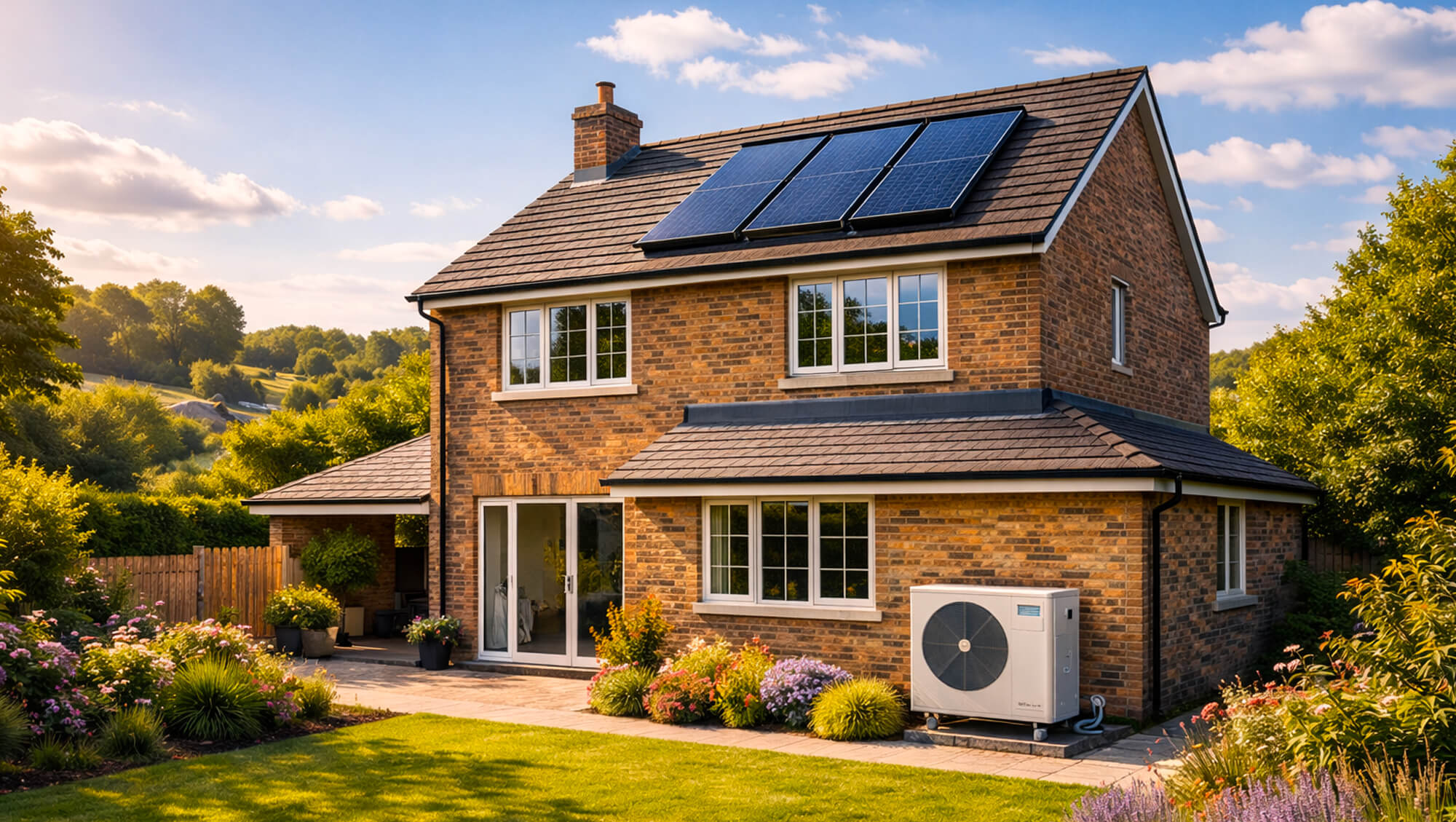
Energy bills remain a real concern for households and businesses. The last few years have shown one thing clearly: relying on a single fuel source can leave you exposed.
Between 1 January and 31 March 2026, Ofgem’s energy price cap for a typical dual-fuel household paying by Direct Debit is set at £1,758 per year, and it changes quarter by quarter.
At the same time, the government has published the Warm Homes Plan (21 January 2026) and confirmed £15bn of public investment to support home upgrades, including solar, batteries, heat pumps and insulation, with targeted help for low-income households and a wider offer expected over time. See the government announcement: Families to save in biggest home upgrade plan in British history.
This guide explains, in plain English, the main renewable options for heating and hot water, what support exists today, and how to decide what makes sense for your property in the current economic climate.
What is Changing Right Now
More Support is Being Directed Towards Practical Home Upgrades
The Warm Homes Plan focuses on measures that can improve comfort and reduce bills, including insulation and low-carbon heating. It also signals a direction of travel towards funded improvements, not just advice, with a combination of targeted support and a broader offer expected to develop over time.
The Boiler Upgrade Scheme remains a major lever for heat pumps
For homeowners and eligible small non-domestic buildings in England and Wales, the Boiler Upgrade Scheme currently provides one grant per property:
- £7,500 towards an air source heat pump
- £7,500 towards a ground source heat pump
- £5,000 towards a biomass boiler
Hybrid systems are not supported by the scheme.
This is set out on GOV.UK: What you can get. Hybrid systems are not supported by the scheme. Eligibility is relatively clear. You need a valid EPC, and if you are unsure about suitability, you should speak to one of our experts. Ofgem’s Boiler Upgrade Scheme guidance for property owners also explains how the scheme works and how the post–8 May 2024 guidance applies. If you want the details specific to the grant, see Westwood’s guide to the Boiler Upgrade Scheme grant for heat pumps.
VAT relief can improve the upfront cost
A 0% VAT rate applies to the installation of certain energy-saving materials from 1 May 2023 to 31 March 2027, after which it is currently scheduled to revert to 5%. This is set out in HMRC guidance: VAT on energy-saving materials and heating equipment (Notice 708/6).
For many households, this is a meaningful saving because it applies directly at the point of purchase.
The renewable options that matter most for heating and hot water
A heat pump moves heat rather than creating it by burning fuel. That is why heat pumps can be efficient, but outcomes depend on system design and how well your home holds onto heat.
Costs (as a starting point): Energy Saving Trust estimates the typical cost of installing an air source heat pump at around £11,000, with the final figure varying depending on the property and how much adaptation is needed (for example, radiators, pipework, or hot water storage).
Running costs: Heat pumps can be cost-effective when the system is properly designed and operated at sensible temperatures. In many cases, they compare well against oil, LPG, and electric heating. The comparison against gas depends on your home, your tariff, and how the system is configured.
Best suited to: homes that can heat efficiently at lower flow temperatures. This is usually helped by good insulation and correctly sized radiators, or underfloor heating where appropriate.
If you want reassurance about performance in winter conditions, Westwood has a separate guide on heat pump performance in cold weather, focused on practical outcomes rather than theory.
Solar hot water (solar thermal)
Solar thermal uses roof collectors to heat domestic hot water. The aim is to reduce how much your boiler or heat pump needs to do, particularly through spring and summer.
Solar hot water can work well where households have consistent hot water use, such as families or homes with higher daily demand. It is typically a complementary system, with your main heat source topping up when solar input is lower.
Costs (as a starting point): Energy Saving Trust estimates a typical solar water heating system at around £6,000, depending on collector type and system size.
Insulation and heat loss
Even when you are focused on renewables, the fundamentals matter. Renewable systems perform best when a property loses less heat.
In practice, many cost-effective projects follow a staged approach:
- Reduce heat loss where feasible (for example, insulation and draft reduction).
- Size and design the heating system for the improved property.
This approach generally improves comfort, improves system efficiency, and reduces the risk of overspending on equipment.
What Should You do in the Current Economic Climate?
Step 1: Decide what you are trying to optimise
Most households want one or more of the following:
- Bill stability and reduced exposure to price swings
- Upfront affordability through grants, VAT relief, and finance options
- Comfort and more consistent heat across the home
- Carbon reduction through lower-carbon heat and hot water
Clarity matters because the “best” technology depends on your priority.
Step 2: Check what support you can access
For many homeowners, relevant support may include:
- The Boiler Upgrade Scheme grant (if eligible)
- 0% VAT on qualifying installs until 31 March 2027
- Measures referenced through the Warm Homes Plan, including wider funding options that are expected to develop over time
Step 3: Make sure the system design matches the building
Heat pumps are not plug-and-play. A good outcome typically involves:
- Confirming heat emitter sizing (radiators or underfloor heating)
- Checking hot water cylinder requirements and available space
- Setting controls correctly for efficient operation (for example, weather compensation and a suitable heating curve)
This is where professional assessment pays for itself. It prevents poor performance, avoids overspending, and sets realistic expectations from the start.
Step 4: If you want progress without overcommitting, start with a low-regret upgrade
If you want to reduce costs and improve comfort without committing to a full heating conversion immediately, many households start with:
- Targeted efficiency improvements that make any future heating choice work better
- Hot water optimisation, including solar thermal where suitable
What Westwood can help with
Westwood Plumbing and Heating focuses on renewable solutions for heat and hot water. We take an engineering-led approach, and we do not sell systems that do not make sense for the property. If a repair, a simpler upgrade, or a staged plan is the most sensible route, we will tell you that first.
If you want a clear view of what is realistic for your home, including eligibility, likely system changes, and the most cost-effective route, start with a consultation and we will map out the options in order of value.