
Heat Pumps in a Yorkshire Cold Snap: Can They Match a Gas Boiler for Warmth and Comfort?
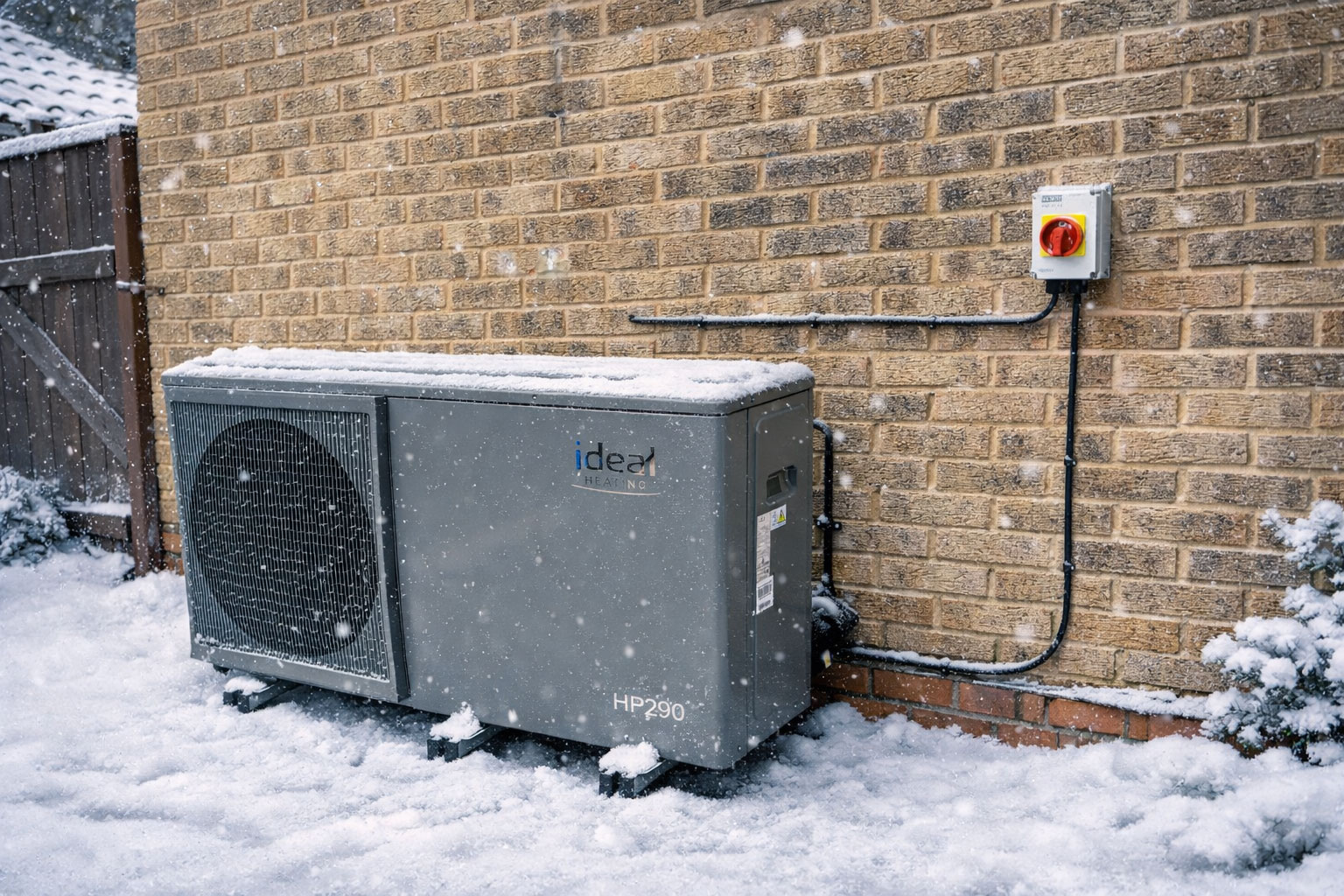
When temperatures drop across East Yorkshire and North Yorkshire, homeowners often ask the same question: will an air source heat pump actually keep a home warm in a proper UK cold snap, or is a gas boiler still the safer option?
Recent UK cold-snap survey data indicates modern heat pumps are keeping homes just as warm as gas boilers, while delivering higher overall satisfaction – particularly on running costs.
At Westwood Plumbing & Heating Ltd, we support households from Beverley and the East Riding of Yorkshire through to North Yorkshire with practical, property-specific advice, whether you are maintaining a boiler, planning a replacement, or assessing whether a heat pump is suitable for your home.
What the Latest UK Cold-snap Data Shows
PHAM News reported findings from an Octopus Energy survey of more than 1,800 UK households carried out during the January 2026 cold snap.
The key comparisons were:
Warmth/comfort: 85% of heat pump owners said their system kept their home warm during the cold weather, versus 80% of gas boiler users.
Overall satisfaction: 89% of heat pump owners were satisfied overall, versus 78% of gas boiler users.
Running cost satisfaction: 66% of heat pump users were satisfied with running costs, compared with around 43–44% of boiler users (figures reported slightly differently across coverage).
Octopus Energy’s Chief Product Officer, Rebecca Dibb-Simkin, said heat pump customers “are staying just as warm as those with gas boilers” and are “happier with the experience overall – especially when it comes to running costs.”
Do Heat Pumps Work in Freezing Temperatures?
Yes, heat pumps continue to operate below freezing, although efficiency typically reduces as outdoor temperatures fall. Energy Saving Trust states heat pumps work in below-freezing temperatures, with most current models operating “fine down to about -25°C.”
The UK Government’s heat pump explainer includes a clear summary from Katy King (Nesta): “Even in weather below freezing, there’s heat energy in the air and ground that heat pumps can use.”
Real-world Performance: What Happens on the UK’s Coldest Days?
Survey satisfaction is helpful, but performance monitoring is also important, especially for homeowners in exposed or rural areas of North Yorkshire.
Energy Systems Catapult’s work on the electrification of heat analysed performance on some of the UK’s coldest days (with mean daily temperatures as low as -6°C) and reported only a marginal decline in performance, with a median air-source heat pump system efficiency of 2.44 on the coldest days.
Marc Brown, Business Leader – Homes at Energy Systems Catapult, concluded: “We can finally put to bed the notion that heat pumps do not work in cold weather conditions and that they are inefficient to run.”
Costs: Why Heat Pumps Can Now Compete with Boiler Replacement
Two shifts have made heat pumps more viable for many households:
1) Boiler Upgrade Scheme grant (England & Wales)
Current support is £7,500 towards an air source heat pump and £7,500 towards a ground source heat pump (with £5,000 for biomass in specific circumstances).
2) Heat pump-specific electricity tariffs
Octopus Energy has stated its Cosy Octopus tariff can save heat pump customers up to £360 a year compared with boiler users on a standard tariff (actual savings depend on the property, system design and how the system is run).
The Real Differentiator: Design, Sizing and Commissioning
Whether a heat pump feels “as warm as a boiler” is usually determined less by the technology and more by whether it is properly designed and commissioned for the home.
Key factors include:
A proper heat-loss assessment (room-by-room), not rule-of-thumb sizing
Correct emitter sizing (radiators/UFH) and appropriate flow temperatures
Controls that match the household (often including weather compensation)
Sound commissioning and homeowner handover (how to run it efficiently)
This matters across our area because housing stock varies widely—from older properties around Beverley and villages across the Wolds, to mixed-age housing around York, and rural North Yorkshire homes where exposure and heat loss can be higher.
If you plan to use grant routes, quality standards and competent installation become even more important. MCS describes itself as the UK’s quality mark for small-scale renewables such as heat pumps.
Frequently Asked Questions
Yes. Heat pumps continue to extract heat from the outside air even when temperatures are below freezing. Government guidance includes expert commentary noting that even below 0°C “there’s heat energy in the air and ground that heat pumps can use.”
Energy Saving Trust also states that heat pumps work in below-freezing temperatures, although efficiency reduces as temperatures drop; it notes most current models work down to around -25°C, with some cold-climate models operating down to -35°C.
What this means locally: In typical East Riding and North Yorkshire winter conditions, a correctly designed heat pump system should maintain comfortable indoor temperatures, provided the property’s heat loss and emitters (radiators/UFH) are properly matched.
Broadly, yes – performance declines somewhat in colder weather, but real-world monitoring suggests modern systems still perform well.
Efficiency remains strong across diverse UK housing types and that on the coldest days in 2025 (down to -6°C) there was only a marginal decline in system performance.
Industry reporting on the same programme states the project found a median system efficiency of 2.44 on the coldest days (down to -6°C).
Practical takeaway: Efficiency in cold snaps is heavily influenced by correct sizing, good controls, and appropriate flow temperatures – more than by the cold weather itself.
If you’re eligible, the Boiler Upgrade Scheme in England and Wales provides grants of:
£7,500 towards an air source heat pump
£7,500 towards a ground source heat pump (including water source and shared ground loops)
£5,000 towards a biomass boiler (with eligibility restrictions)
This is set out on GOV.UK.
Important note: Eligibility criteria apply (property type, existing heating, EPC and insulation recommendations, etc.). A survey is the correct first step to confirm suitability and likely scope.
Not always – but sometimes. The key issue is that heat pumps generally run most efficiently with lower flow temperatures, so some homes benefit from larger radiators (or different emitters) to deliver the same heat output at lower temperatures.
Government guidance on heat pumps notes that, as part of optimising system design, some radiators may need to be changed to larger ones.
Energy Saving Trust similarly explains that radiator upgrades are not mandatory, but bigger radiators can significantly improve performance and reduce running costs by enabling lower-temperature operation.
A Westwood Plumbing & Heating Ltd. expert would conduct a Heat Loss Survey – assessing room-by-room heat loss and your existing emitters, then advise you whether radiator changes are required, optional, or unnecessary.
Westwood Plumbing & Heating Ltd: Local Guidance from Beverley to North Yorkshire
If you are in Beverley, East Riding of Yorkshire, York, or across North Yorkshire, Westwood can help you make a clear, evidence-led decision by:
Assessing whether a heat pump or boiler replacement is best for your home
Identifying likely changes required (radiators/emitters, hot water cylinder, controls)
Setting realistic expectations for comfort, cold-weather performance and running costs
Improving reliability and efficiency of existing systems through maintenance and optimisation.
The most reliable way to understand whether a heat pump will perform well in your property is a professional survey based on heat loss, emitters and control strategy. If you would like a clear recommendation and practical next steps, book a survey with the team today.